|
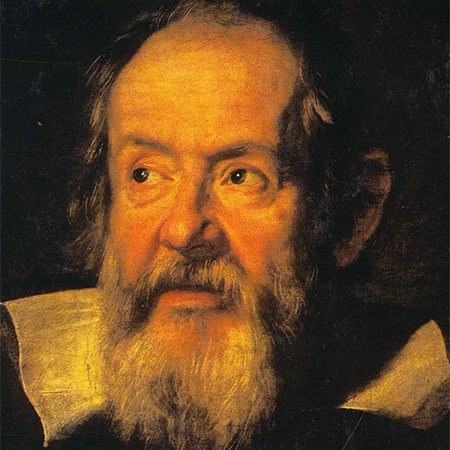
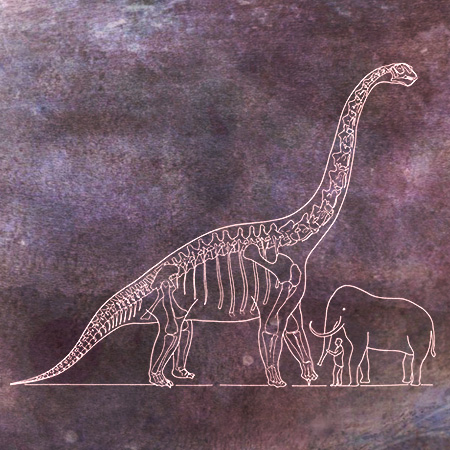
DinosaurTheory.com Home PageYear after year we watch science fiction movies showing creatures that are the wrong size. We may wonder what is wrong with this picture; what, if anything, limits the size of animals. But since Galileo’s Square-Cube Law was not included in our elementary science education most people fail to recognize how size matters. In 1638 Galileo explained what is now called the Square-Cube Law in his last major scientific book titled Dialogues Concerning Two New Sciences. The Square-Cube Law reveals why the common B-rated science fiction movies theme of showing people, gorillas, or insects as being extremely large or small is not physically possible. The Square-Cube Law is an extremely fundamental scientific concept critical to understanding physics, biology, aerodynamics, nanotechnology and numerous other science disciplines. But in addition to these positive attributes, Galileo's Square-Cube Law reveals what is wrong with the paleontologists' claim that there is nothing odd about dinosaurs and pterosaurs growing so large. Over the years the incongruities have become increasingly apparent as to why dinosaurs and pterosaurs should not be so large . For the large dinosaurs there are the incongruities of 1) insufficient bone strength, 2) insufficient muscle strength, and for the taller dinosaurs 3) the problem of unacceptable high blood pressure. For the pterosaurs there is the paradox that no cold-blooded reptile, not even the smallest reptiles, can fly today and yet during the Mesozoic the cold-blooded pterosaurs grew to be the largest flying animals that ever existed. Clearly the belief that there is no scientific paradox regarding the exceptionally large dinosaurs and pterosaurs is incorrect. Yet the paleontology community has no means of saving face while backing down from their position, and so they continue to mislead the public by denying the paradox. There are many talented scientists who recognize the importance of size. In 1928 J. B. S. Haldane advanced Galileo’s ideas when he wrote On Being the Right Size. A generation later numerous other famous scientists followed with additional arguments supporting Galileo's Square-Cube Law. Physics professors Phillip Morrison, Michael Fowler, Benjamin Crowell; biologists Steven Jay Gould, Michael C. LaBarbera, Steven Vogel, Knut Schmidt-Nielsen, Chris Lavers, John Tyler Bonner; and the rebel paleontologist Christopher McGowan have all presented arguments for why size matters. Yet for the most part Galileo’s Square-Cube Law and how it explains why size matters is still being left out of most science education programs. The National Science Educations Standards points in the right direction by emphasizing the teaching of the importance of size; yet the National Science Education Standards does not warn science teachers of the existing scientific incongruities and thus it hurts the grade school science teachers who follow its directive. Elementary science teachers are caught like a deer in the headlights the moment one of their smarter students point out the incongruity between the previous existence of exceptionally large dinosaurs and the argument that size is important. The failure of the paleontology community to solve the dinosaur sized paradox obstructs the ability of science educators to teach the fundamental science of Galileo’s Square-Cube Law thus producing the awful effect of holding back the advancement of all the sciences. About seven years ago I worked out the initial solution to the large dinosaur paradox. My solution, the Thick Atmosphere Solution, seemed unbelievable at first because it implied that there were numerous additional scientific paradoxes hidden away among the science disciplines. On further investigation I found that there were indeed additional scientific paradoxes spread among the science disciplines. One of the most important scientific discoveries of our time is the realization that the Earth's atmosphere has gone through a dramatic transition from being extremely thick throughout most of its history to its present form of being relatively thin. On this website I first reveal the existence of the numerous paradoxes regarding the Mesozoic era and then I explain how the Thick Atmosphere Solution resolves these problems. Below are the chapter summaries. The first eight chapters are presented here in DinosaurTheory.com while all twelve chapters will be included in the published book. David Esker
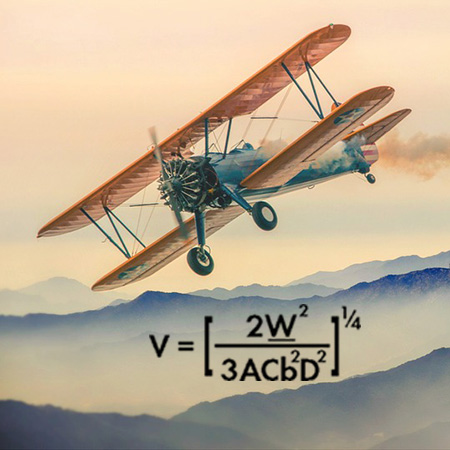
Chapter Summaries1. Galileo’s Square-Cube Law: Galileo’s Square-Cube Law shows that it is impossible to change the size of an object without changing the properties of the object. It is impossible to maintain the proportionality of all the object’s properties because the ratio of an object’s area to its volume decreases with the greater size of an object. This simple scientific concept has far reaching consequences that are extremely important to nearly every science discipline. This chapter explains Galileo’s Square-Cube Law and how the area to volume ratio restricts the variation in size of the more complex objects. 2. The Dinosaur Paradox: Once we understand Galileo’s Square-Cube Law showing how size matters it becomes clear that the large dinosaurs and pterosaurs of the Mesozoic era present a scientific paradox. Four areas of scientific incongruities regarding these animals’ large size are identified: 1) insufficient muscle strength, 2) insufficient bone strength, 3) unacceptably high blood pressure within the tallest dinosaurs, and 4) the paradox of pterosaurs having grossly insufficient power to fly in atmospheric conditions similar to the present. This chapter explains the first three paradoxes concerning the large dinosaurs while the following chapter explains the paradox regarding the large flying pterosaurs. 3. The Science of Flight and the Paradox of Flying Pterosaurs: There is a huge difference between getting something to work and having a correct theoretical understanding of how it works. By testing wing profiles in their wind tunnel and then test flying gliders, the Wright brothers were successful in building the first real airplane; yet nevertheless, the Wright brothers never actually figured out how wings generate lift. A century later we have supersonic jets, and yet the aviation industry still cannot explain how wings generate lift. The most common explanation of lift makes the bogus claim that the air must travel either above or below the wing in the same amount of time. This statement is wrong, and most people within the aviation industry are aware of this. Yet they would rather present an incorrect explanation than suffer the embarrassment of admitting that they cannot explain how an airplane flies. The fact is that the development of airplanes has always been more of an art than a science. The absence of a theoretical understanding of flight becomes most apparent when the paleontologists make their foolish attempts trying to explain how the giant pterosaurs flew. Common sense tells everyone that a reptile the size of a horse should not be capable of flight, but until now there has not been a theoretical understanding of flight enabling us to scientifically clarify what is wrong with the paleontologists’ claim that there is nothing odd about gigantic flying reptiles. In this chapter, I derive the Power for Flight Equations so as to clarify why large pterosaurs could not have flown in an atmospheric environment similar to the present. These equations, and the concepts incorporated in their derivation, are applicable to all airplanes, birds, and all other medium to large flying objects. 4. The Search for a Rational Solution: Acknowledging the existence of these scientific paradoxes, a systematic investigation is conducted to find the solution. The first step is to determine a scaling factor between the size of the largest and tallest animals of today and the largest and tallest animals of the peak of dinosaur gigantism. The next step investigates how the Earth’s gravitational field could have been less during the Mesozoic so as to allow this gigantism. Each possible hypothesis is systematically investigated in regards to scientific principles and physical evidence. This pattern goes on until the presentation of the last possible hypothesis: that the Earth had an extremely thick atmosphere that provided a buoyancy force that reduced the effective weight of the dinosaurs. This proves to be the correct solution. 5. The Thick Atmosphere Solution: The Thick Atmosphere Solution’s ability to solve the dinosaur paradox qualifies it as being a strong hypothesis, but with additional evidence it can be shown that the Thick Atmosphere Solution is actually a new scientific theory. For a conceptual model to achieve the status of being a scientific theory there needs to be 1) multiple distinct evidence-supported arguments all leading to the same conclusion, and 2) the conceptual model must show itself to be invaluable in providing the ‘big picture’ that allows us to make sense of the numerous miscellaneous surrounding facts that were previously a mystery. Each of the remaining chapters presents an evidence-supported argument that leads to the conclusion that the Earth has had an extremely thick atmosphere throughout most of its existence. This chapter starts by addressing a few misconceptions regarding fluids that may have confused some people regarding animals living in a high pressure atmosphere. The chapter then finishes strong by showing how the Thick Atmosphere Solution solves the long-standing paleoclimatologist puzzle of how the Mesozoic era Earth had the same pleasant climate over its entire surface. 6. Biology Revolution: Sometimes we fail to notice unusual facts that should drive our scientific curiosity. Besides the paradox of the dinosaurs being so large there is also the paradox of why dinosaurs have a distinctly different shape from the large terrestrial animals of today. This chapter emphasizes the application of physics and the Theory of Evolution for the understanding of biology. Specifically it points out how species evolve so as to fill available niches within their physical and biological environment. The reason dinosaurs had disproportionally larger rear legs and a powerful flexible tail is because these appendages best facilitated terrestrial animals attempting to move quickly through a thick fluid that is about 2/3’s of the density of the animal. 7. Hell, Heaven and Earth – The Earth’s Internal Heat: For the Thick Atmosphere Solution to be a complete theory there needs to an explanation and supporting evidence showing how this extremely thick atmosphere came into existence and why the present atmosphere is considerably thinner. This requires the development of a supporting theory explaining the source of the fluids that now surrounds the Earth: a theory on the origin of the Earth’s oceans and atmosphere. The fact that these fluids came from the interior of the Earth will become clear in later chapters but for now the focus is on how the interior heat is generated so as to drive these fluids to the surface. The quantity of exhausted volcanic gasses that later evolves into being the atmosphere is largely determined by how much heat is generated inside the Earth. This chapter, the first of the three chapter series, investigates hypotheses regarding the source of the Earth’s interior heat. The investigation leads to the hypothesis that tidal forces are the source of the Earth’s internal heat. 8. Hell, Heaven and Earth – Our Solar System: Despite billions of dollars spent on space exploration, planetary scientists still cannot explain many of the major observations of the different planets and moons of our solar system. For example, planetary scientists give no explanation for why Earth’s nearest neighbor Venus should have an atmosphere ninety times thicker than the Earth’s and why this atmosphere is primary composed of carbon dioxide. The reason this and numerous other observations go unexplained is that the old school planetary scientists have failed to produce the correct applicable scientific theory regarding the evolution of our solar system. This chapter presents the evidence showing that gravitational tidal heating is the primary mechanism for heating not just the Earth but all the planets and moons of our solar system. Each planet or moon evolves as a result of this internal heating such that now that it is 4.6 billion years since the solar system’s formation each planet or moon is either in a stage of its evolution or it has completed its evolution. The author’s theory on planetary development based on tidal heating shows how the application of physics principles enables us to understand our solar system. 9. Hell, Heaven and Earth - The Blue Planet: The author’s theory on planetary development leads the conclusion that the largest terrestrial planet Earth should have thickness atmosphere and that this atmosphere should be like the atmospheres of Venus and Mars in being primary carbon dioxide. Initially the Earth did have the thickest atmosphere and this atmosphere was primary carbon dioxide. But then life evolved on Earth and set off a chain of events that lead to the atmosphere that we have today. Because of the water on the Earth’s surface and life that evolved in this water, the carbon dioxide was removed from the atmosphere until now nitrogen is the primary component of the Earth’s atmosphere. In support of this position, the Earth is literally covered with mountains of rock solid evidence: the sedimentary carbonate rocks limestone and dolomite that lock up the carbon dioxide that once filled the Earth’s atmosphere. 10. Rocks and Fossils: Over the last couple of hundred of years our understanding of the Earth has advanced considerable as a result of the hard work of numerous dedicated geologists; yet we are still a long ways from having a complete picture of how the Earth evolved. The Thick Atmosphere Solution provides an important advancement in understanding much of the gathered geological evidence. The global paleoclimate, glaciations, sea level changes and other physical events of the last half a billion years can now be placed in their proper context based on whether it was a thick or a thin atmosphere environment. 11. Dinosaurs and Dragonflies: The biological changes that occurred through time are even more interesting than the physical changes. Combining the geological record of mass extinctions, knowledge of when the atmosphere was thick or thin, and applying our understanding of how species evolve produces remarkable insight regarding the major biological events that occurred on this Earth. 12. Spaceship Earth: In the process of
greatly increasing our understanding of how the Earth evolved we gain a
greater respect for our home. Hopefully mankind will become more
thoughtful in considering how our actions affect the health of our
planet. Just as centuries ago Galileo gave us a new perspective of
the heavens, the Thick Atmosphere Solution forces us to reconsider our
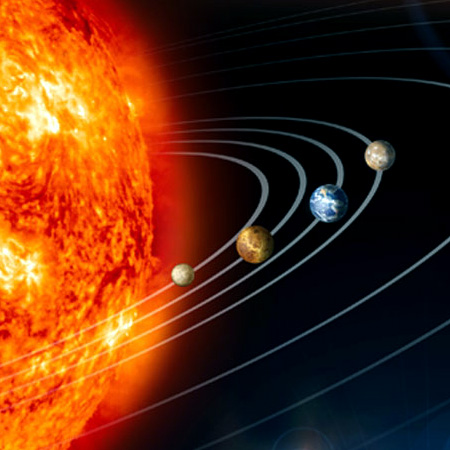
beliefs regarding life, who we are, and what we aspire to be.
Send an e-mail if you have questions or wish to be informed as to when to book will be available.![]() Thick Atmosphere Solution / Biology Revolution / Earth's Heat / Solar System Blue Planet / Rocks & Fossils / Defining Science / Scientific Theories David Esker / External Links / Educational Resources / DinosaurTheory Store THIS MATERIAL IS COPYRIGHTED.PERMISSION IS GRANTED FOR TEACHERS AND OTHER EDUCATORS TO COPY AND DISTRIBUTE THIS MATERIAL, UNALTERED OR CHANGED IN ANY WAY, TO STUDENTS IN BOTH PUBLIC AND PRIVATE EDUCATIONAL INSTITUTIONS. |